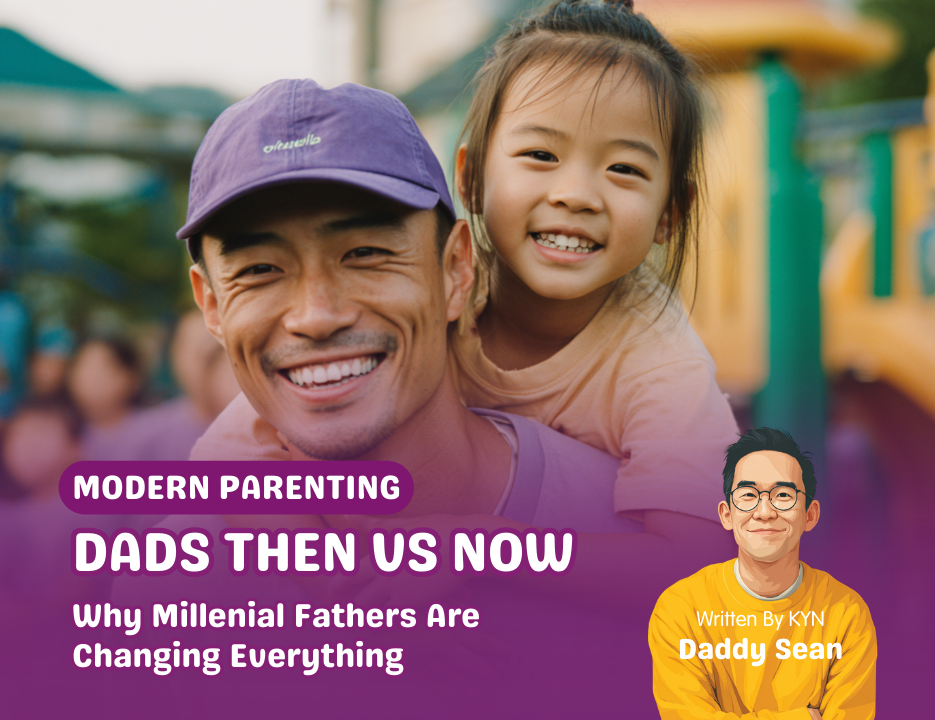
On a weekday morning in Singapore, you’ll see something that would have been rare a generation ago.
A father, alone, pushing a stroller.
Another carrying a toddler while juggling a work call.
One more crouching at eye level outside a childcare centre, speaking calmly to a crying child instead of raising his voice.
It’s subtle. But it’s everywhere.
Fatherhood in Singapore is changing.
And Millennial fathers are at the centre of it.
Who Are Millennial Fathers, Really?
Millennials, broadly born between 1981 and 1996, are now in their late 20s to early 40s, right in the thick of raising young children.
But what makes them different is not just their age.
It’s what shaped them.
They grew up in a Singapore that was:
-
Rapidly modernising
-
Highly education-focused
-
Increasingly connected to the world through the internet
They experienced:
-
The pressure of academic performance and structured success
-
The rise of dual-income households
-
A shift from survival to stability and aspiration
They are also the first generation to come of age alongside:
-
Social media
-
Open conversations about mental health
-
Greater awareness of emotional wellbeing
In short, they were raised in a system that emphasised achievement, but came into adulthood questioning if that was enough.
And that tension shows up in how they parent.
The Fathers Many of Us Grew Up With
For many Singaporeans, our fathers were defined by responsibility.
They worked long hours.
They made sure the bills were paid.
They were present in structure, but not always in emotion.
Love often looked like sacrifice.
Not conversation.
Not vulnerability.
Not “How are you feeling today?”
This wasn’t neglect. It was the norm.
Singapore’s rapid economic growth in the 80s and 90s shaped a generation of men who understood that their primary role was to provide. Stability came first.
Emotional presence was rarely part of the job description.
A Quiet Shift Happening in Plain Sight
Today, expectations of fathers look very different.
In Singapore, dads are no longer seen as just providers. There is a growing expectation for them to also be:
-
Emotionally available
-
Actively involved in caregiving
-
Present in everyday parenting moments
This shift is not just cultural. It is structural.
Government-paid paternity leave has been extended to four weeks. Flexible work arrangements are becoming more common. More fathers are stepping into roles that were once seen as “mum’s domain”.
These are not just policy changes.
They are signals.
Signals that fatherhood is no longer a secondary role.
Why Millennial Fathers Are Parenting Differently
Millennial fathers did not set out to reinvent parenting.
They simply grew up seeing what was missing.
Many were raised by fathers who:
-
Worked long hours
-
Expressed love through provision
-
Struggled with emotional openness
So now, they are doing something different.
Not out of rebellion.
But out of awareness.
They carry both pressure and perspective
Millennial dads were raised in a high-pressure environment.
Grades mattered.
Success was clearly defined.
Stability was the goal.
But as adults, many began to question:
Is achievement enough if connection is missing?
This is why many of them are intentional about:
-
Spending time with their children
-
Being emotionally present
-
Not repeating the same distance they once felt
From control to connection
Watch closely at any playground in Singapore today.
You’ll notice that discipline looks different.
Many Millennial fathers:
-
Explain instead of command
-
Guide instead of punish
-
Connect before they correct
To some, this may look like softness.
But beneath it is intention.
A desire to raise children who feel safe, heard, and secure.
Parenting is now a shared role
Singapore families have changed.
Dual-income households are the norm. Mothers are working, contributing, and expecting partnership at home.
This naturally reshapes fatherhood.
Millennial dads are not “helping”.
They are co-parenting.
Doing school runs, packing bags, attending appointments, and being present in the daily realities of raising a child.
The Reality Behind the Progress
The shift is real, but it is not without tension.
Singapore still has demanding work cultures. Long hours remain a challenge for many fathers trying to be more present.
Even with improved paternity leave policies, not all dads feel comfortable taking the full leave available to them.
There is still an unspoken pressure.
To provide.
To perform.
To prioritise work.
Millennial fathers are navigating both worlds.
Trying to succeed at work while showing up fully at home.
Why This Shift Matters for Singapore Families
This evolution in fatherhood comes at an important time.
Singapore is facing declining birth rates and rising parenting pressures.
Raising children today is not just about financial readiness.
It is about emotional capacity, partnership, and support.
The modern Singapore father is no longer just a provider.
He is:
-
A caregiver
-
A partner
-
An emotional anchor
And that changes the foundation of family life.
A Different Kind of Strength
It’s easy to compare generations and ask if fathers today are better.
But that may not be the right question.
The fathers of the past did what they had to, with what they knew.
Millennial fathers are doing the same.
Just with different awareness.
Different expectations.
Different tools.
And perhaps a different definition of strength.
Not the kind that stays silent.
But the kind that shows up.
Final Thought
The Singapore dad is not disappearing.
He is evolving.
From authority to connection.
From distance to presence.
And for the next generation growing up, that difference may shape not just how they are raised.
But how they learn to love, communicate, and parent in the future.
Hello! I am Daddy Sean

I am one of the editors of KidYouNot Parenting blogs! I have two adorable sons. I’m a nature lover who values wellbeing and mindful parenting. I’m all about creating balance, connection, and joy in family life.
Join KidYouNot SG Parenting Community
Sign up to become a member and gain access to exclusive parenting tips, special deals, and early updates on new products and events.
Follow us on Instagram and Telegram to connect with other parents, share your journey, and enjoy fun, supportive content every day!