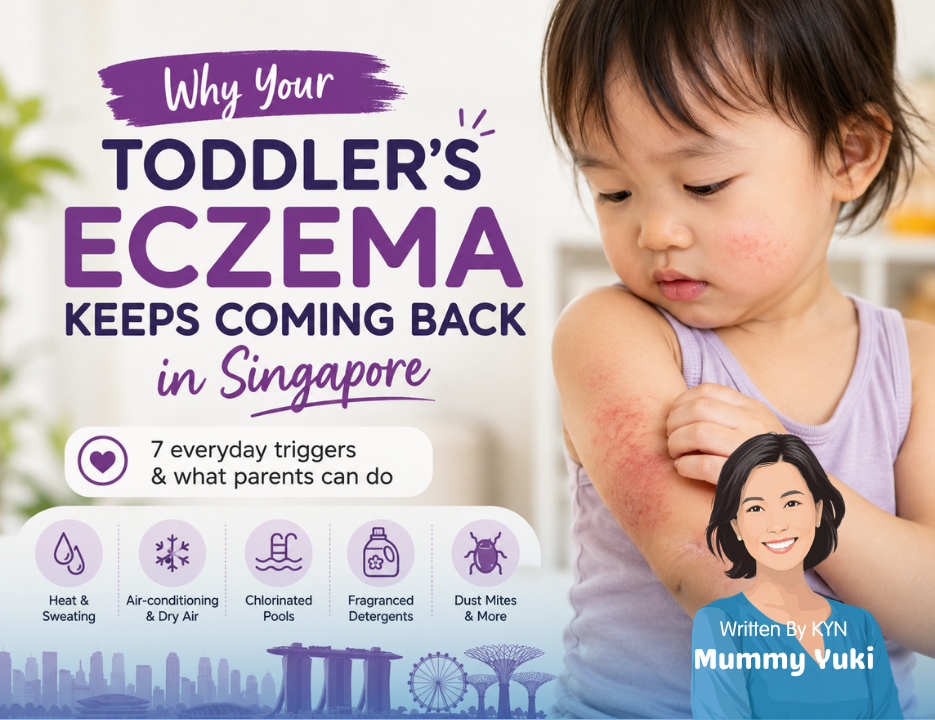
You finally get your toddler’s eczema under control. The redness fades, the scratching stops, and their skin starts to heal.
Then a week later, it’s back.
If this sounds familiar, you’re not alone. Eczema is one of the most common childhood skin conditions in Singapore, affecting around 1 in 5 children. While eczema cannot be cured, understanding what triggers flare-ups can help parents manage it better.
The tricky part? Many of these triggers are part of everyday life in Singapore.
From our hot and humid weather to air-conditioned shopping malls, swimming lessons and even laundry detergent, your toddler’s skin is constantly exposed to things that can irritate an already weakened skin barrier.
Here’s why eczema tends to keep coming back, and what you can do about it.
Why does eczema keep returning?
Eczema, also known as atopic dermatitis, is a chronic condition where the skin barrier doesn’t work as well as it should.
Think of healthy skin as a brick wall. The skin cells are the bricks, while natural oils act like the mortar holding everything together. In children with eczema, that “mortar” isn’t as strong. Moisture escapes more easily, while irritants, allergens and bacteria can get in more easily too.
That’s why eczema doesn’t simply disappear after a few days of moisturiser. Even when the skin looks better, the skin barrier still needs ongoing care.
1. Singapore’s heat and humidity lead to more sweating
Singapore’s tropical climate means toddlers sweat almost every day.
While sweating helps cool the body, it can also irritate eczema-prone skin. Sweat contains salts that may trigger itching, especially around the neck, elbows, knees and skin folds. Once your child starts scratching, it can damage the skin further and start another eczema flare.
What parents can do
- Dress toddlers in lightweight cotton clothing.
- Change out of sweaty clothes promptly.
- Rinse off sweat after active outdoor play.
- Apply moisturiser after bathing to replenish lost moisture.
2. Air-conditioning can dry out sensitive skin
Many Singapore families spend much of the day moving between hot outdoor weather and cool air-conditioned environments.
While air-conditioning helps reduce sweating, it also removes moisture from the air. This can leave already dry skin feeling even drier.
For toddlers with eczema, the constant shift between humid outdoors and dry indoor air can make the skin barrier work even harder.
What parents can do
- Continue using moisturiser even if your home is air-conditioned.
- Avoid directing air-conditioning vents directly at your child while they sleep.
- If possible, keep indoor temperatures comfortable rather than excessively cold.
3. Chlorinated swimming pools may trigger flare-ups
Swimming is a fantastic activity for children and many toddlers in Singapore start lessons at an early age.
However, chlorine helps keep pools clean by removing bacteria, and it can also strip away some of the skin’s natural protective oils.
For children with eczema-prone skin, this may increase dryness after swimming.
What parents can do
- Shower your child with clean water before entering the pool.
- Rinse thoroughly immediately after swimming.
- Pat the skin dry instead of rubbing.
- Apply a generous layer of moisturiser straight after showering.
4. Fragranced soaps and detergents may be irritating
Many products marketed for babies smell lovely, but fragrance is one of the most common causes of skin irritation.
Even if your child’s body wash is gentle, fragranced laundry detergents, fabric softeners and scented clothing can leave residues that stay in contact with the skin throughout the day.
What parents can do
Choose products labelled:
- Fragrance-free
- Soap-free
- Suitable for sensitive or eczema-prone skin
When washing clothes, towels and bedsheets, consider using an extra rinse cycle to reduce detergent residue.
5. Dust mites thrive in Singapore’s climate
Here’s one trigger many parents don’t think about.
Dust mites love warm, humid environments, making Singapore an ideal place for them to thrive.
While dust mites don’t directly cause eczema, children who are sensitive to them may experience worsening symptoms after prolonged exposure, especially during sleep.
What parents can do
- Wash bedsheets weekly in warm water.
- Vacuum mattresses and upholstered furniture regularly.
- Reduce soft toys on the bed.
- Keep bedrooms well ventilated where possible.
6. Frequent bathing can dry out the skin
After a long day of preschool and playground fun, many toddlers need a bath.
In Singapore’s weather, some children even bathe twice a day.
Bathing itself isn’t harmful, but long, hot baths and harsh soaps can remove the skin’s natural oils.
What parents can do
Dermatologists generally recommend:
- Short baths using lukewarm water.
- Gentle cleansers instead of strong soaps.
- Applying moisturiser within three minutes after bathing to lock in moisture.
7. Little everyday irritants add up
Sometimes it isn’t just one trigger.
It’s the combination of:
- Morning walk to school in the heat.
- Air-conditioned classroom.
- Running around during playtime.
- Swimming lesson after school.
- Freshly washed clothes with scented detergent.
Each exposure may seem small, but together they can be enough to trigger another flare.
Can eczema be prevented?
Not always.
Genetics play a significant role, and children with a family history of eczema, asthma or hay fever are more likely to develop the condition.
However, reducing everyday triggers and maintaining a consistent skincare routine can help reduce the frequency and severity of flare-ups.
The goal isn’t perfect skin every day. It’s helping your toddler stay comfortable, sleep better and spend more time enjoying childhood without constant itching.
When should you see a doctor?
While mild eczema can often be managed at home, it’s worth seeking medical advice if:
- Your child’s skin becomes painful, swollen or develops yellow crusting, which may indicate an infection.
- The itching is affecting sleep regularly.
- Moisturising alone isn’t helping.
- The eczema keeps returning despite avoiding common triggers.
A doctor may recommend prescription creams or other treatments to help control inflammation safely.
The bottom line
Living in Singapore doesn’t cause eczema, but our climate and daily routines can certainly make flare-ups more challenging for children with sensitive skin.
The good news is that small changes can make a big difference. Choosing gentle skincare products, keeping the skin well moisturised and recognising your child’s personal triggers can all help break the itch-scratch cycle.
Every child is different, so don’t be discouraged if it takes time to find what works best. With patience and a consistent routine, many toddlers experience fewer flare-ups and happier, more comfortable skin.
Hello! I am Mummy Yuki

I am one of the editors of KidYouNot team! As a WFH mum, I love quiet mornings, soft music, and messy play is my kind of vibe. I’m all about slow parenting, art time, and letting kids be kids.
Join KidYouNot SG Parenting Community
Sign up to become a member and gain access to exclusive parenting tips, special deals, and early updates on new products and events.
Follow us on Instagram and Telegram to connect with other parents, share your journey, and enjoy fun, supportive content every day!