Singapore is a city that moves quickly.
Our children grow up in a world that is digital, global, and fast-paced. They navigate screens before they hear their grandparents’ stories, and they learn to read devices before they learn some of the basic family rituals that once shaped childhoods. This is not a criticism of modern life.
It is simply the reality we live in.
And it is exactly why traditions matter even more now.
Traditions are not just practices from the past. They are a way of passing on values, a framework for understanding relationships, and a connection to family history. They help children see where they come from, and by extension, understand who they are. In a world that is constantly moving forward, traditions offer a quiet but essential grounding.
Why Knowing Their Roots, Manners, and Family Stories Matters in Modern Singapore
In Singapore, children are exposed to a rich tapestry of cultures and experiences. Multicultural festivals, global media, and diverse communities provide a broad view of the world.
Yet, exposure alone does not create identity. Children need grounding in their own family and cultural history to build confidence and a sense of belonging.
Understanding family roots and stories helps children contextualise their experiences.
Listening to grandparents’ accounts of childhood challenges, family struggles, and decisions teaches perspective. These stories offer insights into resilience, patience, and values that cannot be fully captured in schools or through media.
Manners and social customs are part of this education. Teaching children how to address their elders respectfully, how to greet aunties and uncles, or how to behave at family gatherings might seem small, but these actions reinforce relationships and empathy.
They shape children’s understanding of how to navigate both family and community with respect.
Why is it important for children to learn family rituals and social customs in modern Singapore?
Research supports this. Children who are involved in family traditions tend to have stronger emotional security, a clearer sense of identity, and better social relationships
Modern Life and the Subtle Loss of Tradition
Modernisation has brought convenience and opportunities but also introduced challenges to passing down traditions.
Smaller living spaces, busier schedules, and digital entertainment mean less time for shared meals, storytelling, and family gatherings.
These changes do not erase traditions intentionally; they make it easier to forget them. When rituals are observed only sporadically, they lose their significance. When elders are rarely present, children may not understand the context of cultural practices.
This is why parents need to be intentional. Incorporating traditions into everyday life, even in small ways, ensures they remain relevant. A weekly family meal, helping with preparation for a festival, or listening to a story from a grandparent can become meaningful, lived lessons in values and connection.
How can parents preserve traditions when daily life is so busy?
The Importance of Small Traditions
Traditions do not need to be grand to have impact. Small, consistent practices often leave the deepest impressions. Regular family meals teach cooperation and communication.
Participating in chores or preparations during celebrations teaches responsibility. Listening to family stories builds awareness and empathy.
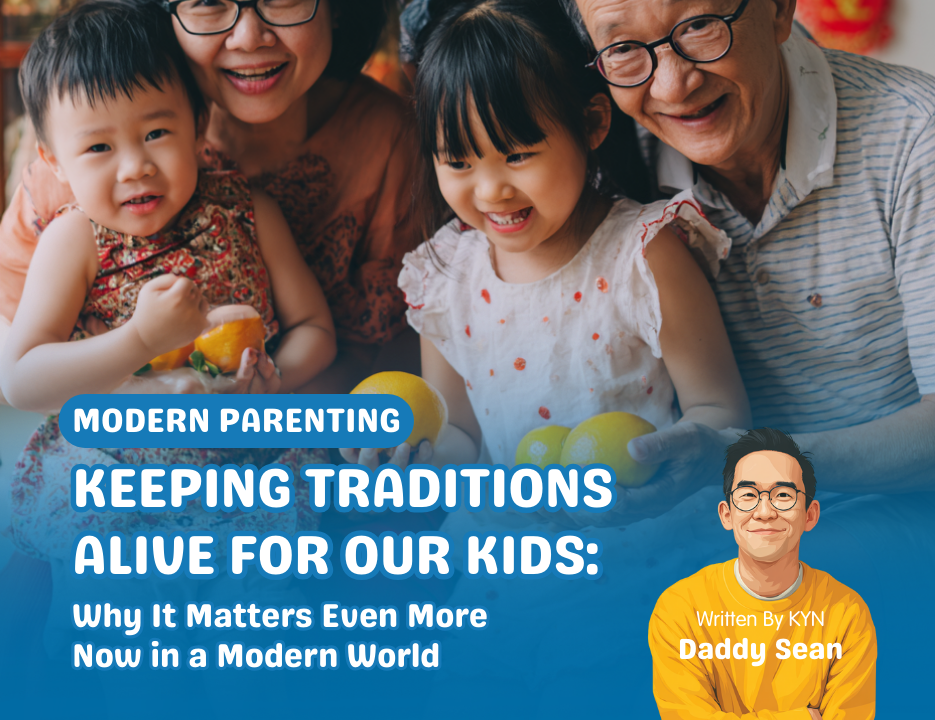
Spending time with grandparents is equally vital. They provide a tangible link to the past.
Children who interact regularly with elders absorb history, cultural context, and values organically. This interaction helps develop emotional intelligence, respect, and appreciation for family heritage.
Even everyday interactions matter. How children learn to say “thank you” or “please,” how they wait their turn, or how they show consideration during shared activities — these small gestures reinforce manners and social understanding that last a lifetime.
Multiculturalism and Cultural Confidence
Singapore’s multicultural society presents a unique opportunity. Children are exposed to different festivals, languages, and traditions, which can enrich their understanding of the world. But exposure alone is not enough.
Children develop confidence and empathy when they understand their own roots first. A strong sense of identity allows them to appreciate other cultures without confusion or insecurity.
Participating in community celebrations alongside maintaining their own family traditions helps children see that culture is dynamic, inclusive, and meaningful.
How does understanding one’s own culture help children relate to others in a diverse society?
Building Values for the Future
When children participate in family traditions, they are learning more than customs. They are learning values. Respect, gratitude, responsibility, and a sense of belonging are embedded in these experiences.
These lessons are subtle but enduring. Children internalise them through repetition and practice, rather than lectures or instructions.
In a society that rewards speed, efficiency, and achievement, these grounding experiences provide children with perspective, resilience, and emotional stability.
Making Traditions Work Today
Passing on traditions does not require perfection or elaborate ceremonies. What matters is consistency and explanation. Children should understand not just what they are doing, but why they are doing it.
Parents can weave traditions into routines: involve children in cooking family recipes, share stories during meals, make time for grandparents, and celebrate cultural practices in ways that feel natural. Technology can even support this — video calls with distant relatives, digital scrapbooks, or online storytelling sessions can complement in-person experiences.
Conclusion
Modern Singapore offers children opportunities and experiences our own childhoods could never imagine. But even as they navigate this complex, fast-moving world, family traditions provide a grounding force.
By understanding their family stories, observing customs, and participating in rituals, children gain more than knowledge. They develop identity, social awareness, and a sense of continuity. They learn values through experience and connection, rather than instruction.
Preserving traditions is not about resisting modern life. It is about ensuring that, as our children grow, they carry with them the lessons, relationships, and values that matter most. This intentional passing on of culture ensures that even in a rapidly changing world, children remain connected to where they come from — and are better prepared for where they are going.
Hello! I am Daddy Sean

I am one of the editors of KidYouNot Parenting blogs! I have two adorable sons. I’m a nature lover who values wellbeing and mindful parenting. I’m all about creating balance, connection, and joy in family life.
Join KidYouNot SG Parenting Community
Sign up to become a member and gain access to exclusive parenting tips, special deals, and early updates on new products and events.
Follow us on Instagram and Telegram to connect with other parents, share your journey, and enjoy fun, supportive content every day!