
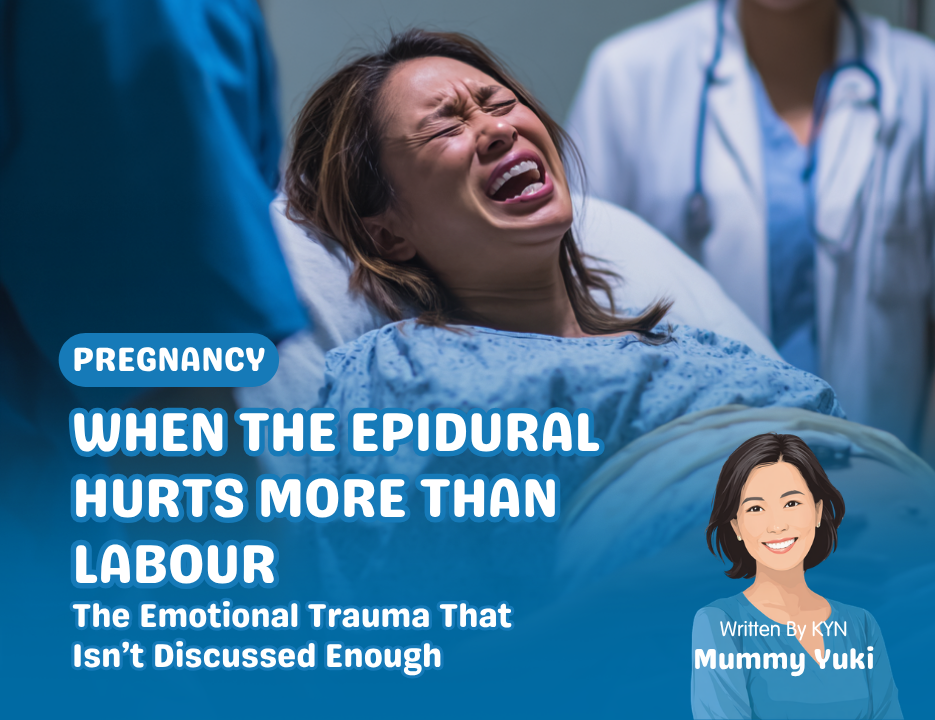
I still remember the moment as if it were yesterday. The contractions were intense but familiar – a rhythm I expected, had prepared for, had braced myself for.
What I didn’t expect was the searing pain when the epidural needle was inserted into my back.
There was this sharp, burning sensation that shot down my spine, a moment of fear so visceral that it overwhelmed everything else.
For years after, that memory lingered in my body and mind, long after my baby was born.
And when I talked to other mums, I realised something important: so many of us carry this emotional pain silently. We talk about breastfeeding, baby sleep schedules, postpartum bodies but we rarely talk about how deeply painful birth experiences, especially around the epidural, can affect us emotionally later on.
Epidurals Are Common in Singapore But the Emotional Impact Isn’t Discussed Enough
In Singapore, labour epidurals are widely accepted as the standard method for pain relief during childbirth. In one survey of pregnant women in Singapore, about half (51.6 %) said “yes” to epidural analgesia before labour and even among those unsure or initially declining, 68 % still had a favourable or neutral view of the epidural option once its benefits were explained.
That tells us something: many mums want pain relief and choose epidurals because labour pain can be excruciating, but the decision isn’t always straightforward emotionally or psychologically.
And here’s the part we don’t talk about enough after the adrenaline fades and the baby is in your arms, the memory of deep pain or fear (like what I felt during that needle insertion) can stay with you.
Why Many Women Don’t Process the Trauma (And Why That Matters)
Mothers often focus on baby care, understandably so. But that means their own emotional healing often gets deprioritised. There aren’t clear statistics in Singapore on how many women actively seek support for birth trauma, but globally, postpartum depression affects about 10 % to 15 % of new mums, and perinatal anxiety is also common.
Even studies in Singapore show that nearly one in four women had postpartum depression about three months after childbirth.
These aren’t just “baby blues”, they’re real emotional distress that can be worsened by unresolved trauma or frightening memories from labour.
The Hidden Consequences of Ignoring Emotional Healing
Physical recovery after birth is what everyone asks about how long before you can walk normally, when bleeding stops, when you can exercise again. But psychological healing is often left out of the discussion.
When emotional pain from birth isn’t acknowledged or addressed:
• It can fuel postpartum anxiety and depression
Some women find themselves reliving moments from labour especially the moments of intense pain or loss of control which can contribute to anxiety or a shrunken sense of self post‑birth.
• It can affect bonding
Even when physically healthy, some mums find it hard to emotionally connect with their baby or fully enjoy motherhood because part of them is still stuck in that birth memory.
• It shapes future pregnancies
Unresolved pain and fear can make subsequent pregnancies stressful, lead to avoidance behaviours, or cause women to make choices out of fear rather than empowerment.
Healing Isn’t Weak, It’s Essential
If I could go back and tell my post‑birth self one thing, it would be this: Your emotional scars are real. They deserve care, too.
Trauma isn’t a badge of shame, and wanting healing isn’t selfish. For some mums, healing looks like:
- Talking to a trauma‑sensitive therapist
- Joining a support group of women who’ve had similar experiences
- Processing the birth story with a doula or mentor
- Gentle movement or somatic exercises that help release the fear stored in the body
Your birth story doesn’t have to be a burden you carry silently. Acknowledging it, naming it, and giving it space that’s where real healing begins.
To Every Mama Reading This
If you feel like your birth experience still echoes in your emotions, you’re not alone. Many of us brush off that pain because our bodies healed physically, but the emotional aftermath remains unspoken.
Your feelings are valid. What you went through was real. Healing emotionally is just as important as healing physically.
If you want, I can share a gentle healing guide or checklist that other mums have found helpful after traumatic birth experiences. Just let me know!
Hello! I am Mummy Yuki

I am one of the editors of KidYouNot team! As a WFH mum, I love quiet mornings, soft music, and messy play is my kind of vibe. I’m all about slow parenting, art time, and letting kids be kids.
Join KidYouNot SG Parenting Community
Sign up to become a member and gain access to exclusive parenting tips, special deals, and early updates on new products and events.
Follow us on Instagram and Telegram to connect with other parents, share your journey, and enjoy fun, supportive content every day!