Children Learn About Relationships by Watching Their Parents
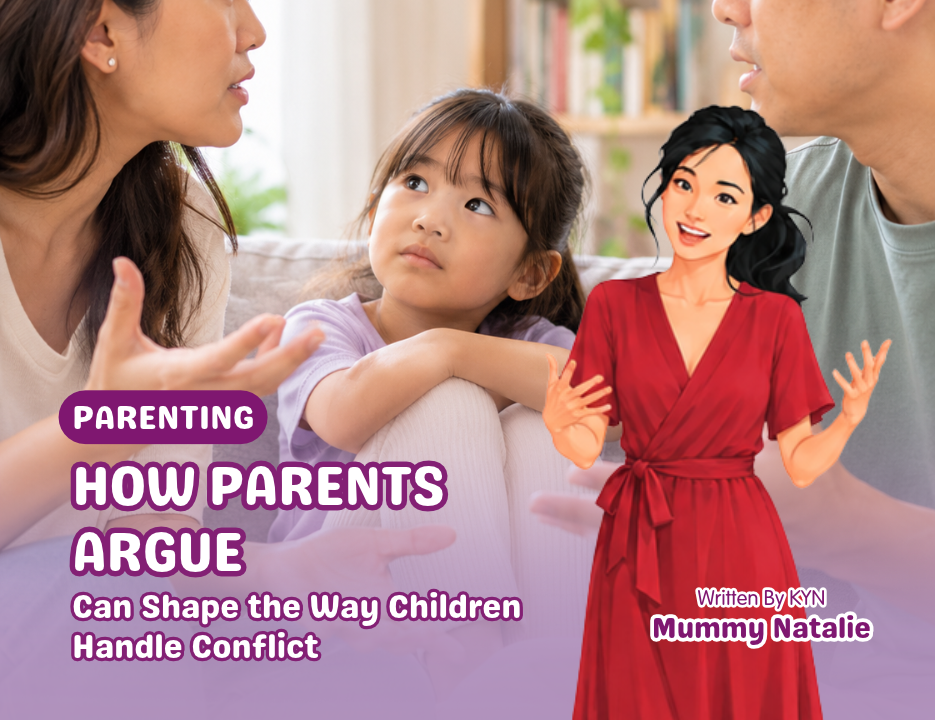
Most parents would prefer their children never to witness an argument between them and their partner. When disagreements happen, some couples try to keep them behind closed doors, believing that children should only see the happy side of their relationship.
But what if seeing parents disagree is not necessarily a bad thing?
Children learn much more about relationships than we sometimes realise. They observe how their parents communicate, respond to frustration, express emotions and resolve disagreements. Over time, these everyday interactions can shape how children understand relationships and handle conflict themselves.
Interestingly, research suggests that it is not simply the presence of disagreements that matters. How parents manage those disagreements may make a difference.
What Does Research Say About Parents Arguing in Front of Children?
A 2026 systematic research synthesis reviewed 23 studies published between 2015 and 2025, examining constructive conflict between parents and its relationship with children’s development.
The findings challenge the idea that all parental disagreements are harmful.
Constructive disagreements were associated with several positive outcomes in children, including:
-
Greater emotional security: Children may feel more secure when they see their parents handle differences in a respectful and reassuring way.
-
Better social problem-solving skills: Observing parents listen, negotiate and work towards solutions may help children develop similar skills.
-
Fewer emotional and behavioural difficulties: Constructive parental conflict was associated with fewer difficulties in children’s emotional and behavioural development.
These findings suggest that children can learn valuable relationship skills from watching their parents work through disagreements.
However, it is important to understand the distinction between constructive and destructive conflict. The findings do not mean that all arguments are beneficial or that parents should deliberately argue in front of their children.
Not All Arguments Are the Same
There is a significant difference between parents who disagree but remain respectful and parents who engage in hostile arguments.
Constructive conflict happens when two people can express different opinions without attacking or belittling one another. They may feel frustrated or disagree strongly, but they still make an effort to listen and understand each other’s perspectives.
For example, imagine a couple disagreeing about how much screen time their child should have.
One parent believes screen time should be limited, while the other feels that some flexibility is reasonable.
Instead of shouting or blaming each other, they discuss their concerns, listen to one another and eventually agree on a set of rules that works for the family.
Their child gets to witness something important: two people can have different opinions without treating each other disrespectfully.
Destructive conflict, on the other hand, may involve shouting, insults, threats, personal attacks, hostility or prolonged periods of unresolved tension.
When children repeatedly witness these interactions, they may feel anxious, insecure or caught in the middle of their parents’ relationship.
The important difference is not whether parents agree, but how they treat each other when they do not.
1. Children Can Develop Greater Emotional Security
Children depend on their parents for a sense of safety and stability. When they witness their parents arguing, they may not always understand what the disagreement is about.
Some children may even worry that their parents are no longer happy together or that the family might break apart.
However, when parents demonstrate that disagreements can be resolved, children can learn that conflict does not automatically mean a relationship is in danger.
For example, seeing a parent apologise after speaking harshly, or watching both parents calmly work towards a solution, can reassure children that relationships can recover after difficult moments.
This is particularly important because children are still learning how to understand emotions and relationships.
They need to know that people can feel upset, disagree and still care about one another.
2. Children Learn How to Solve Problems
Think about how children learn to share toys, negotiate with friends or handle disagreements with their siblings.
These are skills that take time to develop.
Parents can provide everyday examples of how to manage differences through their own interactions.
When children see their parents taking turns to speak, listening to different perspectives and finding compromises, they are exposed to practical examples of problem-solving.
Instead of learning that the loudest person wins an argument, they may begin to understand that listening and communication can help resolve disagreements.
These lessons can eventually influence how they interact with classmates, friends and, later in life, their own partners.
3. Children Learn How to Express Their Emotions
Parents are often the first people children observe when it comes to managing emotions.
When adults become frustrated, disappointed or upset, children pay attention to how those feelings are expressed.
Do their parents immediately lose their temper? Do they take a moment to calm down? Can they explain why they are upset without hurting someone else’s feelings?
These everyday moments can become examples for children to follow.
For instance, a parent who says, “I’m feeling frustrated right now. Can we talk about this after I’ve calmed down?” is showing a child that strong emotions can be acknowledged without turning them into hurtful behaviour.
This does not mean parents must always remain calm. Nobody manages their emotions perfectly all the time.
What matters is also showing children how to recognise mistakes, take responsibility and repair relationships afterwards.
4. Apologising Can Be Just as Important as Resolving the Argument
Many parents focus on avoiding arguments in front of their children, but there is another important lesson they may overlook: showing children how to make things right after a disagreement.
Sometimes, parents lose their temper. They may raise their voices, say something they regret or struggle to communicate their feelings.
When this happens, pretending nothing happened is not necessarily the best approach.
An apology can demonstrate accountability.
For example, a parent might say:
“I’m sorry I raised my voice earlier. I was upset, but I should have spoken more calmly.”
This teaches children that making mistakes does not make someone a bad person. More importantly, it shows them that taking responsibility is part of maintaining healthy relationships.
Children learn that saying sorry is not a sign of weakness. It is a way of acknowledging how our actions affect others.
How Can Parents Disagree More Constructively?
No couple agrees on everything, especially when raising children. Differences in parenting styles, finances, household responsibilities and family expectations can naturally lead to disagreements.
The goal is not to eliminate conflict entirely, but to manage it in a way that does not make children feel unsafe or responsible for their parents’ problems.
Here are a few things parents can practise:
1. Focus on the issue, not the person.
Discuss the problem without attacking your partner’s character. Saying “I feel overwhelmed with the household responsibilities” is more constructive than blaming your partner for being irresponsible.
2. Give each other a chance to speak.
Listening does not mean you have to agree. It simply shows that you respect your partner’s perspective, even when you see things differently.
3. Avoid using children as messengers.
Children should not be expected to take sides, carry messages or decide which parent is right. Adult disagreements should remain the responsibility of the adults.
4. Know when to take a break.
If emotions are running too high, pause the conversation and return to it when both parties are calmer. It is better to take time to cool down than to continue an argument that becomes hurtful.
5. Let children see you make up.
When appropriate, allow children to see that you have resolved a disagreement. A simple explanation that you both had different opinions but have worked things out can help reassure them.
Children Don’t Need Perfect Parents, They Need Healthy Examples
Parenting often comes with the pressure to get everything right. We worry about what our children watch, eat, learn and experience. Sometimes, we even feel guilty when they witness us having a disagreement with our partner.
But healthy relationships are not built on never having arguments.
They are built on communication, respect, understanding and the willingness to work through difficult moments together.
The research offers an interesting reminder: children are learning about relationships through the everyday interactions they witness at home.
They do not need to see parents who agree on everything. They need to see that differences can be handled without disrespect, that mistakes can be acknowledged and that relationships are worth working on.
Perhaps one of the most valuable lessons we can teach our children is not how to avoid conflict, but how to handle it with kindness and respect.
Because the way we treat each other at home may become the way our children learn to treat others outside it. 💜
Research reference: 2026 systematic research synthesis reviewing 23 studies published between 2015 and 2025 on constructive conflict between parents.
Note: The reported findings describe associations, not proof that constructive parental disagreements directly cause better developmental outcomes.
Hello! I am Mummy Natalie

I am one of the editors of KidYouNot Parenting Blog! coffee is my life saviour as a mum of two. My parenting philosophy? Hugs, love, and lots of patience (because honestly, some days need all three). I enjoy sneaking in kopi breaks, spontaneous family makan sessions, and turning everyday chaos into fun memories.
Join KidYouNot SG Parenting Community
Sign up to become a member and gain access to exclusive parenting tips, special deals, and early updates on new products and events.
Follow us on Instagram and Telegram to connect with other parents, share your journey, and enjoy fun, supportive content every day!