“Don’t take photos of the baby.”
“Don’t bring the baby out after sunset.”
“Put a pair of scissors under the pillow.”
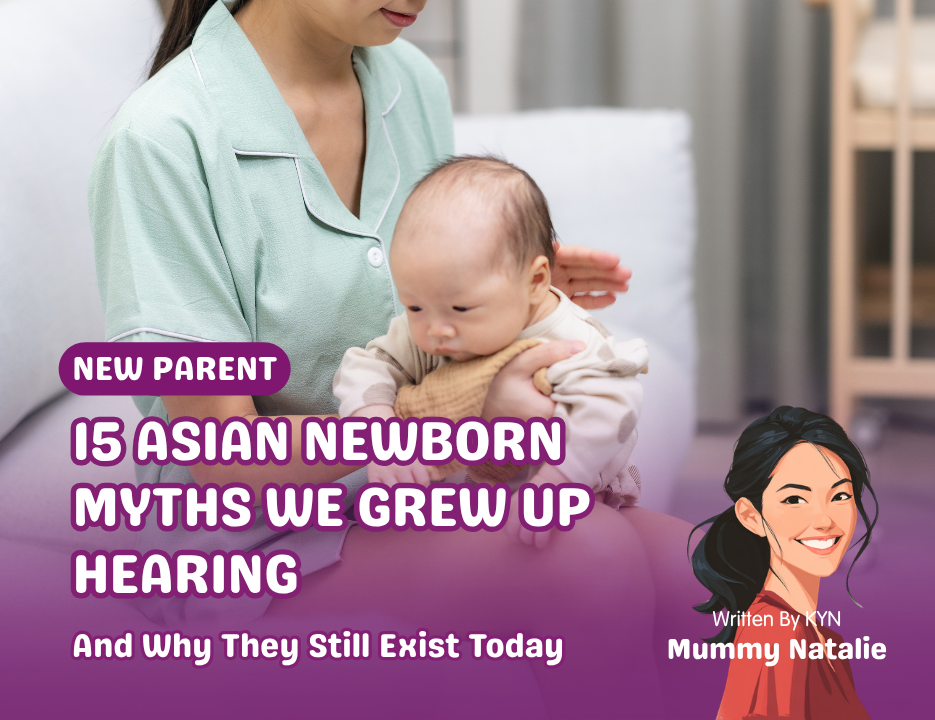
If you’re a new parent in Singapore, chances are you’ve heard at least one of these from a well-meaning parent, grandparent, or relative.
While some of these beliefs may sound superstitious today, many originated from a time when infant mortality was high, medical knowledge was limited, and families relied on traditions passed down through generations to keep babies safe.
Let’s explore some of the most common Asian newborn myths and the possible reasons behind them.
1. Taking Photos of a Newborn Can Steal Their Soul
Some cultures believe that photographs capture part of a person’s spirit, making newborns vulnerable to bad luck or negative energy.
Today, we know photos don’t steal souls, but the belief likely came from a time when photography was unfamiliar and mysterious.
2. Babies Shouldn’t Go Out After Sunset
Many Asian families believe spirits are more active at night and may disturb newborns.
While there is no scientific evidence for this, limiting outings after dark may have helped protect babies from insects, colder temperatures, and exposure to illness.
3. Don’t Praise a Baby Too Much
Ever noticed grandparents downplaying compliments?
When someone says, “Your baby is so cute!”, an elder might respond, “Aiya, not really.”
This belief stems from the idea that excessive praise can attract jealousy, bad luck, or the “evil eye.”
4. Protect the Soft Spot on a Baby’s Head
The fontanelle, or soft spot, is often considered a vulnerable point where negative energies can enter.
Although the spiritual explanation varies, the fontanelle is physically delicate, so generations naturally became extra protective of it.
5. Don’t Cut a Baby’s Hair Too Early
Some believe early haircuts affect intelligence, luck, or health.
In reality, hair growth isn’t linked to intelligence, but many families still choose auspicious dates for a baby’s first haircut.
6. Keep Scissors or Sharp Objects Near the Baby
This sounds strange to modern parents, but some traditions place scissors, safety pins, or knives near a baby’s bed to ward off evil spirits.
These objects were believed to provide spiritual protection.
7. Babies Can See Spirits
A baby smiling at an empty corner of the room?
Many grandparents will confidently tell you they’re seeing angels, ancestors, or spirits.
Science suggests babies often react to sounds, shadows, or developing visual abilities, but the myth remains one of the most popular.
8. Don’t Hang Baby Clothes Outside at Night
The belief is that wandering spirits may attach themselves to the clothing.
A more practical explanation? Night air can leave clothes damp and attract insects or mould.
9. Pregnant Women and Newborns Should Avoid Funerals
Many Asian cultures believe funeral energy can negatively affect mothers and babies.
While this is rooted in spiritual beliefs, it may also have served as a way to reduce stress and exposure to large crowds during vulnerable periods.
10. Red Strings, Black Dots and Amulets Protect Babies
From black dots on the forehead to red bracelets and protective charms, many cultures use symbols believed to ward off evil eyes and negative energy.
You’ll still spot these traditions in many families today.
11. Babies Must Wear Socks and Hats All the Time
If you’ve ever heard “The baby is cold!” when everyone else is sweating, you’re not alone.
Many elders believe wind entering the body can cause illness.
While newborns do need help regulating body temperature, overheating can also be a concern.
12. Don’t Trim a Baby’s Nails at Night
Traditionally, this was believed to bring bad luck or shorten lifespan.
Before modern lighting, however, trimming tiny nails in dim conditions could easily result in accidental injury.
13. New Mothers Should Stay Indoors for 30 to 40 Days
Chinese confinement, Malay pantang, and Indian postpartum practices all share a common theme: rest and recovery.
While some confinement rules may seem outdated today, the underlying principle of supporting a mother’s physical and emotional recovery remains valuable.
14. Don’t Let Too Many People Carry the Baby
Some families worry that babies absorb the energy of everyone who holds them.
Practically speaking, limiting contact can reduce exposure to germs during the newborn stage.
15. Don’t Wake a Sleeping Baby for Visitors
Some elders believe disturbing a baby’s sleep affects growth and development.
This one actually has some truth behind it. Sleep plays a crucial role in a baby’s physical and brain development.
Tradition or Superstition?
Looking back, some of these beliefs may seem unusual or even amusing.
Yet many were born from a simple desire shared by every generation of parents: keeping their babies safe.
Before Google, parenting books, and paediatricians on speed dial, families relied on observations, community wisdom, and cultural traditions to navigate the uncertainties of raising children.
Whether you choose to follow these practices or not, understanding where they came from can help us appreciate the love, concern, and intentions behind them.
Sometimes, what looks like superstition is really a glimpse into how previous generations did their best with the knowledge they had.
Hello! I am Mummy Natalie

I am one of the editors of KidYouNot Parenting Blog! coffee is my life saviour as a mum of two. My parenting philosophy? Hugs, love, and lots of patience (because honestly, some days need all three). I enjoy sneaking in kopi breaks, spontaneous family makan sessions, and turning everyday chaos into fun memories.
Join KidYouNot SG Parenting Community
Sign up to become a member and gain access to exclusive parenting tips, special deals, and early updates on new products and events.
Follow us on Instagram and Telegram to connect with other parents, share your journey, and enjoy fun, supportive content every day!