Most parents want to raise children who are caring, empathetic, and emotionally aware.
So when a child checks in on us, comforts us when we’re upset, or seems unusually mature for their age, it can feel like a sign that we’re doing something right.
But sometimes, a child can become so attuned to a parent’s emotional needs that they begin carrying responsibilities that don’t belong to them.
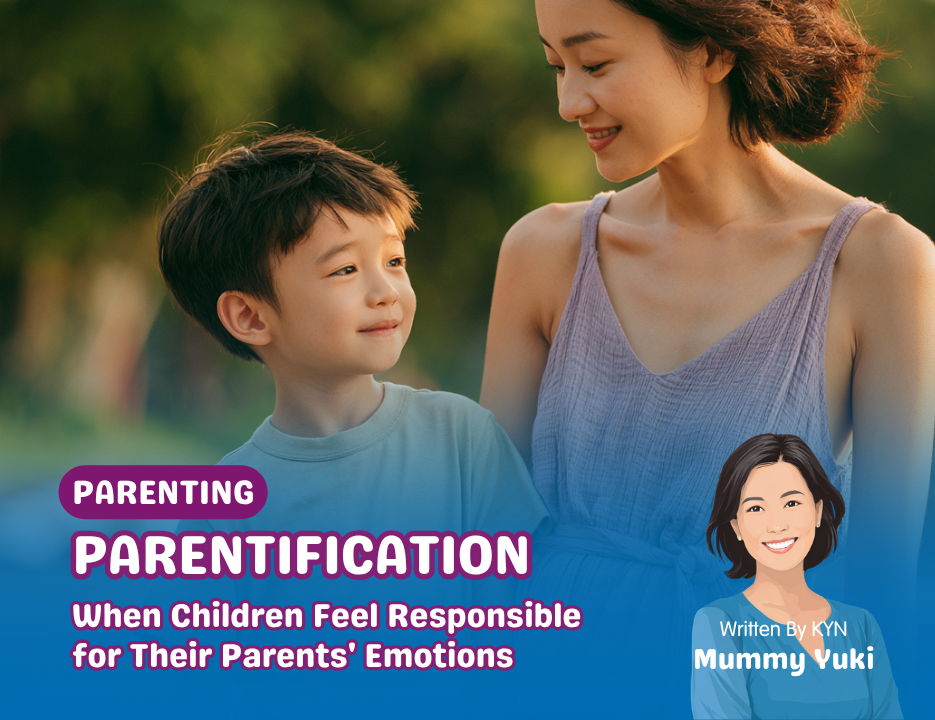
Psychologists call this parentification.
Parentification occurs when a child takes on responsibilities that are more appropriate for an adult.
While it can involve practical responsibilities such as caring extensively for younger siblings or managing household duties, it can also happen emotionally, when a child becomes a parent’s confidant, emotional support system, or primary source of comfort.
A little responsibility can help children develop confidence and resilience. Too much responsibility, especially emotional responsibility, can become a burden they were never meant to carry.
What Does Parentification Look Like?
Parentification is not always obvious.
It doesn’t necessarily mean a child is cooking meals, paying bills, or acting as a substitute parent.
In many modern families, it looks much more subtle.
For example:
- A child feels responsible for keeping Mum or Dad happy.
- A parent frequently shares adult worries, marital conflicts, or emotional struggles with their child.
- A child becomes the person a parent turns to whenever they feel lonely, stressed, or upset.
- A child feels guilty spending time with friends because a parent might feel alone.
- A child becomes the emotional “peacekeeper” within the family.
- A child worries excessively about a parent’s wellbeing.
Over time, the child may begin prioritising a parent’s emotional needs above their own.
Why Parentification Can Be Easy to Miss
Unlike neglect or harsh parenting, parentification often develops within close and loving relationships.
A parent may simply enjoy talking to their child. A child may naturally be empathetic, caring, and mature. Over time, the emotional boundaries can become blurred without anyone noticing.
Because the child often appears responsible, thoughtful, and well-behaved, parents may not realise they are carrying worries and emotional burdens beyond their years.
This subtle nature is what makes parentification so important to recognise.
Why Does Parentification Happen?
Most parents do not intentionally create this dynamic.
In fact, it often develops during stressful seasons of life when parents are doing their best to cope.
Parentification can happen when parents are under significant pressure or have limited emotional support.
This may be more common among:
- Single parents managing everything on their own.
- Stay-at-home parents who spend long hours with their children and have limited adult interaction.
- Parents whose spouses work long hours or travel frequently.
- Parents experiencing marital difficulties.
- Families without a strong support network.
- Parents facing financial, emotional, or caregiving pressures.
In these situations, a child may naturally become a source of companionship and comfort.
The challenge arises when the child begins feeling responsible for meeting emotional needs that should ideally be supported by other adults.
How Parentification Affects Child Development
Children who experience parentification often appear highly mature, responsible, and emotionally aware.
These qualities can be positive.
However, when children consistently carry emotional burdens beyond their age, it can affect their emotional development over time.
Difficulty Setting Boundaries
Children who grow up caring for others’ emotional needs may learn that other people’s feelings are more important than their own.
As adults, they may struggle to say no, prioritise themselves, or establish healthy boundaries.
Becoming a People-Pleaser
They may feel responsible for keeping everyone around them happy and comfortable, even at their own expense.
Anxiety and Excessive Guilt
Many parentified children become highly sensitive to disappointment, conflict, or signs that someone is unhappy.
They may worry excessively about letting others down.
Suppressing Their Own Emotions
When a child feels that a parent’s emotions require constant attention, they may learn to hide their own feelings and needs.
Feeling Responsible for Problems They Cannot Control
Children are not equipped to solve adult challenges. Yet many parentified children quietly believe it is their job to make things better.
Ironically, the child who appears the strongest may sometimes be carrying the heaviest emotional load.
Healthy Closeness vs Parentification
It’s important to remember that emotional closeness is healthy.
Children should feel connected to their parents.
They should learn empathy, compassion, and responsibility.
The difference lies in the direction of care.
In a healthy parent-child relationship:
- The parent is primarily responsible for the child’s emotional wellbeing.
- The child feels safe expressing their own feelings and needs.
- The child knows that adult problems are not theirs to solve.
- Support flows primarily from parent to child.
In a parentified relationship:
- The child feels responsible for managing the parent’s emotions.
- The child worries excessively about the parent’s wellbeing.
- The child suppresses their own needs to protect the parent.
- Emotional support begins flowing from child to parent.
Gentle Questions for Parents
If this topic resonates with you, consider reflecting on these questions:
- Does my child ever seem worried about my happiness?
- Do I regularly share adult concerns with my child that would be better discussed with another adult?
- Does my child feel guilty when spending time away from me?
- Am I relying on my child for emotional support during difficult periods?
- Does my child have enough freedom to simply be a child?
These questions are not about blame.
Parentification often develops unintentionally, especially during stressful seasons of life. Awareness is the first step.
How Parents Can Maintain Healthy Boundaries
Children benefit from close, loving relationships with their parents. The goal is not emotional distance, but healthy emotional boundaries.
Some ways to maintain that balance include:
- Seeking emotional support from other adults whenever possible.
- Being mindful about sharing adult worries or relationship problems with children.
- Reassuring children that your emotions are not their responsibility to fix.
- Encouraging children to express their own feelings openly.
- Creating opportunities for play, friendships, and age-appropriate independence.
- Regularly checking in on whether your child is carrying worries that belong to adults.
A Loving Reminder
Many parents today are carrying enormous pressures.
Work, caregiving, finances, household responsibilities, and the emotional demands of raising children can feel overwhelming at times.
If your child has stepped up to comfort or support you, it often reflects the love and connection within your family.
The goal is not to stop children from caring.
The goal is to make sure they never feel responsible for carrying burdens that belong to adults.
Children can be compassionate without becoming caregivers.
They can be empathetic without becoming emotional support systems.
And one of the greatest gifts we can give them is the freedom to experience childhood, knowing that the adults are carrying the adult responsibilities.
Hello! I am Mummy Yuki

I am one of the editors of KidYouNot team! As a WFH mum, I love quiet mornings, soft music, and messy play is my kind of vibe. I’m all about slow parenting, art time, and letting kids be kids.
Join KidYouNot SG Parenting Community
Sign up to become a member and gain access to exclusive parenting tips, special deals, and early updates on new products and events.
Follow us on Instagram and Telegram to connect with other parents, share your journey, and enjoy fun, supportive content every day!