How fast the year flew by.
As 2025 draws to a close, I found myself reading more and more articles by parenting journalists about a worrying trend. Rising mental stress among children and young people. Anxiety, emotional burnout, overwhelm, even at ages that once felt far too young for such heavy feelings.
As I sat with these conversations and reflected quietly as a mum, I couldn’t help but wonder if this phenomenon is more closely linked to us than we realise. Not because parents don’t care enough, but perhaps because many of us care too much.
This year, I started to ask myself an uncomfortable question.
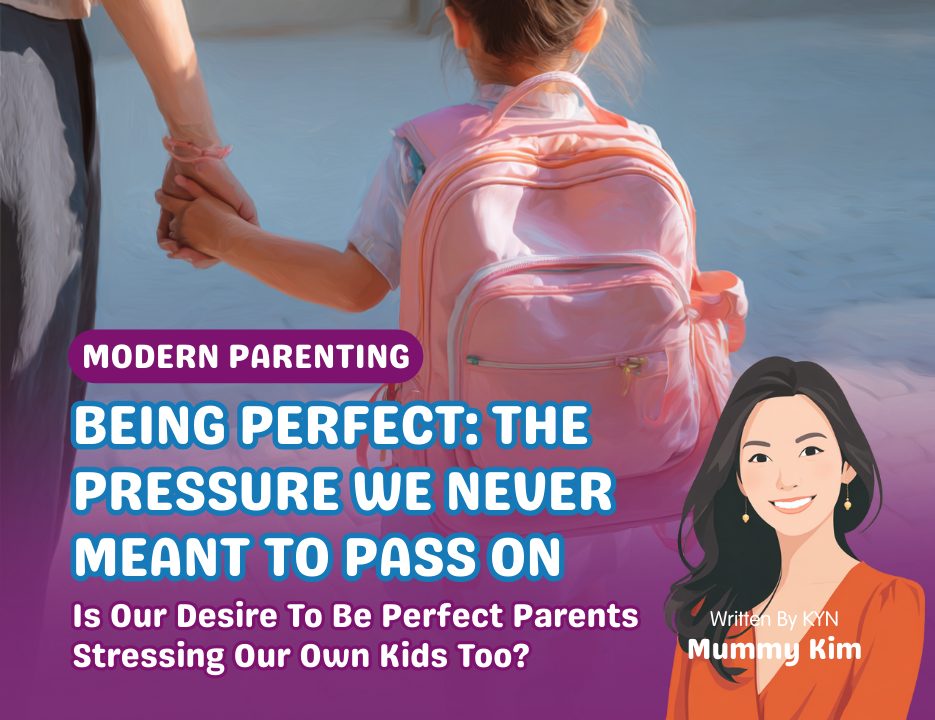
Could our struggle to be perfect parents be quietly teaching our children that they need to be perfect too?
When perfect parenting creates pressure
Most parents I know are trying their absolute best. We read. We research. We reflect. We worry if we’re doing enough, or doing it right.
But children don’t just listen to our words. They feel our emotional state.
When we become tense around mistakes, when we rush to fix every problem, when we are harsh on ourselves for getting it wrong, our children are watching. Over time, they may begin to absorb an unspoken message.
To be loved, I must be good. I must get it right. I must not disappoint.
Psychology calls this internalised perfectionism. I simply see it as pressure I never meant to pass on.
The inner child we are still trying to heal
For many of us, parenting quietly reopens old emotional chapters. When our child cries, struggles, or feels rejected, something deeper stirs within us. Not always consciously, but deeply felt.
Without realising it, we may try to give our child what we ourselves did not receive. More patience. More attention. More affirmation. More safety.
While this comes from love, it can quietly turn into pressure. Not just on our children, but on ourselves too.
Psychology reminds us that many parents are not only raising a child. We are also responding to the unmet needs of our own younger self. In those moments, we are parenting two hearts at once.
How stress gets passed down, unintentionally
Parents who strive for perfection are usually deeply loving. I know this because I see it in myself.
But children are incredibly sensitive to emotional undercurrents. They notice how stressed we become when things go wrong. How uncomfortable we are with failure. How quickly we try to smooth over difficult feelings.
So they adapt. They become careful. They try harder. They hide their struggles. They become the “easy” child.
Not because they want to be perfect, but because perfection feels emotionally safer.
And slowly, quietly, stress is inherited.
A year-end reflection, not self-blame
This reflection isn’t about guilt. It’s about awareness.
As the year comes to a close, I’m reminding myself to pause and ask gentler questions.
Did my child feel safe to fail around me this year? Did they see me make mistakes and recover? Did they feel loved even in their messiest moments?
Because psychology tells us something reassuring. Children don’t need perfect parents. They need parents who can soften, repair, and show that mistakes don’t threaten love.
Carrying this reminder into the year ahead
If there’s one intention I’m bringing into the new year, it’s this.
To loosen my grip on perfection. To let my child see me try, stumble, and begin again. To model that effort matters more than flawlessness.
When we give ourselves permission to be imperfect, we give our children permission to breathe too.
And perhaps, in a world that feels increasingly pressured, that may be one of the kindest gifts we can offer them.
Hello! I am Mummy Kim!

A beauty-loving mum who believes that looking good and feeling good go hand in hand. My parenting mantra is raising happy, confident kids with strong self-esteem! Between facial masks and storybooks, I’m all about nurturing both inner and outer beauty, for myself and my little ones.
Join KidYouNot SG Parenting Community
Sign up to become a member and gain access to exclusive parenting tips, special deals, and early updates on new products and events.
Follow us on Instagram and Telegram to connect with other parents, share your journey, and enjoy fun, supportive content every day!